

The Timer that No One Saw

A story that happens every day across the oilfield. Will today be your oil well?

_____
Miguel had been running the same route for almost twelve years. Every morning before sunrise he’d grab a thermos of coffee, climb into the dusty white pickup, and start the loop—tank batteries, pump jacks, separators, and controllers spread across miles of West Texas scrubland.
He knew every gate, every cattleguard and every well.

Well 34 was always easy.
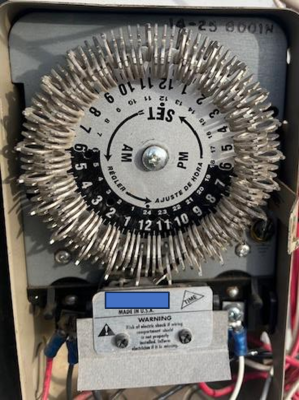
It was a simple setup: an older beam pump running on a timer controller mounted inside a small metal enclosure next to the unit. The timer kept the well pumping in cycles—45 minutes on, 45 minutes off—to prevent fluid pound and keep the rod string happy.
Miguel pulled up around 8:10 AM like he always did. The pump was running. He stepped out, stretched, and walked his usual circle around the unit.
The beam was stroking smoothly. Thunk… whoosh… thunk… whoosh…
The gearbox sounded normal. No knocking. No squealing belts. He checked the tank level gauge. It had moved since yesterday. “Looks good,” he muttered.
Inside the controller box, the timer dial had stopped working two days earlier. The tiny motor that turned the dial had burned out, leaving the contacts permanently closed. The well had been running non-stop ever since.

But nothing on the outside gave it away.
Miguel closed the gate and moved on.
_____
Day 3
The well kept running.
Instead of cycling like it was designed to, it pumped continuously. At first the production looked great—more strokes meant more fluid. But after a few days, the pump started hitting gas pockets.
Downhole, the plunger slammed into partially filled fluid columns.
Fluid pound.

Rod stress started building.
Still, from the surface, the pump looked fine. Miguel stopped again on his route.
Same sounds.
Same rhythm.
Same smooth strokes.
He checked the tank gauge again. “Still making good oil,” he said to himself.
He drove off.
_____
Day 7
The rods had been taking punishment all week. The pump was outrunning the formation now, pulling more fluid than the reservoir could replenish. Gas interference increased. Each pound was a little harder.

The polished rod began to vibrate slightly at the top of the stroke. A vibration you might notice if
you stared at it long enough.
But pumpers don’t stand there for ten minutes watching every stroke.
Miguel had fifteen more wells before lunch.
He glanced.
Listened.
Looked at the tank.
Everything seemed normal.
_____
Day 9
At 2:40 AM, halfway through another unnecessary run cycle, the rod string finally gave up.

Snap.
The break happened 3,200 feet downhole.
The pump jack kept moving, but the load instantly dropped. The unit started over-stroking, slamming at the top of the beam
The motor amperage fell.
The well stopped producing.
But no one was there to see it.
_____
The Next Morning Miguel pulled up again. This time the sound was different.
The pump jack was flying through strokes too easily, the counterweights swinging almost freely. “Ah hell,” he sighed. Rod part.

He opened the controller box to shut down the unit and noticed something strange. The timer dial hadn’t moved. He tapped it with his finger. Nothing. The little motor inside was dead.
The well had been running continuously for a week. Miguel leaned against the truck and shook his head. “Would’ve never known,” he said. And he was right.
Because nothing about his normal route—the quick walkaround, the sound check, the tank level glance—would have revealed the broken timer.
Not until the rods broke.
_____
The Lesson
Manual routes are good.
But they miss things that happen between visits.
A timer can fail.
A controller can stick.
A well can run longer than it should.
And unless someone is watching continuously, the problem can hide in plain sight.
Just like the timer no one saw.


Comments